
How to Set Up Secure Home WiFi That Stays Safe

How to Set Up Secure Home WiFi That Stays Safe

A new router can make everything feel faster – until an unfamiliar device appears on the network, a video call drops, or a smart camera starts acting strangely. Taking a few minutes to set up secure home wifi protects more than internet access. It helps protect the computers, phones, work files, cameras, doorbells, and accounts connected to it.

The good news is that home WiFi security does not require enterprise-level equipment or a networking degree. Most households can make a major improvement with the router they already own by changing a handful of settings and keeping them maintained.

Start with the router itself

Your router is the traffic controller for your home network. If it is outdated, poorly configured, or still using its factory password, every device connected to it is exposed to unnecessary risk.

Begin by placing the router in a central, open area when possible. A router hidden in a cabinet, behind a television, or beside large metal appliances may have weaker coverage. Weak coverage is not only frustrating. It can encourage people to use improvised solutions, such as old range extenders or unsecured hotspots, that make a network harder to manage.

Before changing settings, identify the router’s make and model. The model is usually printed on a label underneath the unit. You will also need the router’s administration address, which is often listed on that label or in the setup app. This administration page is different from the WiFi network your family joins. It controls the router itself.

If the router is more than several years old and no longer receives firmware updates, replacement may be the safer choice. Older routers can still provide internet access, but they may not support current security standards or receive fixes for known vulnerabilities.

Change the administrator login first

Many routers ship with a default administrator username and password. Those defaults are widely known, which is why leaving them in place is one of the most common and avoidable home network problems.

Log in to the router administration page or app and create a unique administrator password. This password should not be the same as your WiFi password, email password, or the password used for any other account. A long passphrase made of unrelated words is easier to remember than a short, complicated string and is generally much harder to guess.

Store the new administrator password in a reputable password manager or in a secure place. If you lose it, you may need to reset the router and configure the network again.

While you are in the administration settings, turn off remote management unless you have a specific reason to use it. Remote management lets someone access router settings from outside your home. It can be useful in limited situations, but most home users do not need it and are better protected with it disabled.

Choose the right WiFi security setting

When you set up secure home wifi, the encryption option matters. Look for WPA3-Personal first. WPA3 is the current preferred choice for most home networks because it provides stronger protection against password-guessing attacks.

If an older device cannot connect using WPA3, use WPA2-Personal with AES encryption. Avoid WEP, WPA, and older mixed security modes whenever possible. They were designed for an earlier era of wireless networking and are no longer appropriate for a modern home.

Some routers offer a WPA2/WPA3 transition mode. This can be a reasonable temporary compromise when a household has older printers, smart devices, or game consoles that do not yet support WPA3. The trade-off is compatibility versus using the strongest available protection. If you use transition mode, make a note of the devices that require it and consider replacing them over time.

Your WiFi password should be long and unique. Aim for at least 16 characters, preferably a passphrase that is not based on your address, family name, pet’s name, or birthday. Do not reuse the password from an online account. If a website suffers a data breach, reused passwords can give attackers a shortcut into other parts of your digital life.

Give your network a sensible name

The network name, also called the SSID, is what people see when they look for WiFi. Choose a name your household can recognize without including personal details. Avoid your last name, street number, apartment number, or the router model.

A name such as “Desert Home Network” tells visitors what they need to know. A name such as “Smith Family 14322” provides information that strangers do not need.

Hiding the network name is sometimes presented as a security feature, but it offers little real protection and can create connection problems for legitimate devices. Strong encryption, a strong password, and updated router software do far more for security than hiding the SSID.

Update firmware and turn on automatic updates

Router firmware is the software that runs the device. Manufacturers release updates to fix bugs, improve stability, and address security issues. A router can have an excellent password and still be vulnerable if its firmware is years out of date.

Check the administration page or router app for available updates. If automatic firmware updates are available, enable them. Some routers restart after an update, so schedule the update for a time when a brief internet interruption will not affect work, school, or streaming.

It is also wise to check for updates after adding a new router, switching internet providers, or noticing unexplained connection issues. If a router no longer receives updates from its manufacturer, that is a practical signal to plan for replacement.

Separate guests and smart devices from your main network

A guest network is one of the most useful home WiFi features. It gives visitors internet access without giving their phones and laptops direct access to your computers, printers, storage devices, or other connected equipment. Set a guest network with its own password, and change that password occasionally if it is shared often.

Many newer routers also let you create a separate network for Internet of Things devices. This includes smart televisions, plugs, thermostats, cameras, voice assistants, and similar equipment. These devices are convenient, but they do not always receive updates as consistently as computers and phones.

Putting smart devices on a separate network limits what can happen if one device is compromised. The exact setup depends on the router. Some routers call this an IoT network, while others use guest network isolation or VLAN settings. For most homes, a properly configured guest or IoT network is enough. Small businesses operating from home may need a more carefully segmented setup, especially when work computers handle customer records or financial information.

Review what is connected

Open the router app or administration page periodically and review the list of connected devices. You may see names that are not immediately obvious, particularly for smart devices. Compare the list with the phones, computers, tablets, televisions, printers, and home automation equipment you own.

If you find a device you do not recognize, do not assume it belongs to a neighbor or a family member. First ask everyone in the household about it. If no one can identify it, change the WiFi password, remove the unknown device if the router allows it, and reconnect your known devices using the new password.

This review also helps solve ordinary connection problems. A forgotten tablet, an old laptop, or a device stuck in a loop can consume bandwidth and make the whole network feel slow.

Protect the devices using your WiFi

A secure router cannot fully protect a computer that has outdated software or malware. Keep operating systems, browsers, security software, phones, and smart devices updated. Use strong, separate passwords for important accounts and enable multi-factor authentication when it is available.

Be careful with devices that connect briefly and are then forgotten, such as an old printer, a child’s discontinued gaming device, or a security camera that came with the house. If you do not use it, disconnect it. Every connected device is another device that needs updates and attention.

For people who work from home, avoid sharing the primary work computer with guests or connecting it to an open public hotspot when a secure connection is available. Your home network should support work, but it should not become a weak point for client information or business accounts.

When a professional setup is worth it

Some WiFi issues go beyond changing a password. Large homes, detached offices, thick walls, unreliable coverage, multiple access points, cameras, remote workers, and business equipment can make router settings more complicated. A poorly configured mesh system can be just as frustrating as an old router, even if the equipment is new.

ICU Computer Services can help local home users and small businesses evaluate router placement, configure secure settings, connect devices safely, and troubleshoot networks that keep dropping or slowing down. A proper setup should be secure, but it should also be practical for the people who use it every day.

Your network does not need constant attention. Set a reminder to review connected devices and router updates a few times a year, and revisit the settings whenever you add major equipment or move to a new home. That small routine can prevent a surprising number of problems before they interrupt your day.

Small Office Network Troubleshooting Guide

Small Office Network Troubleshooting Guide

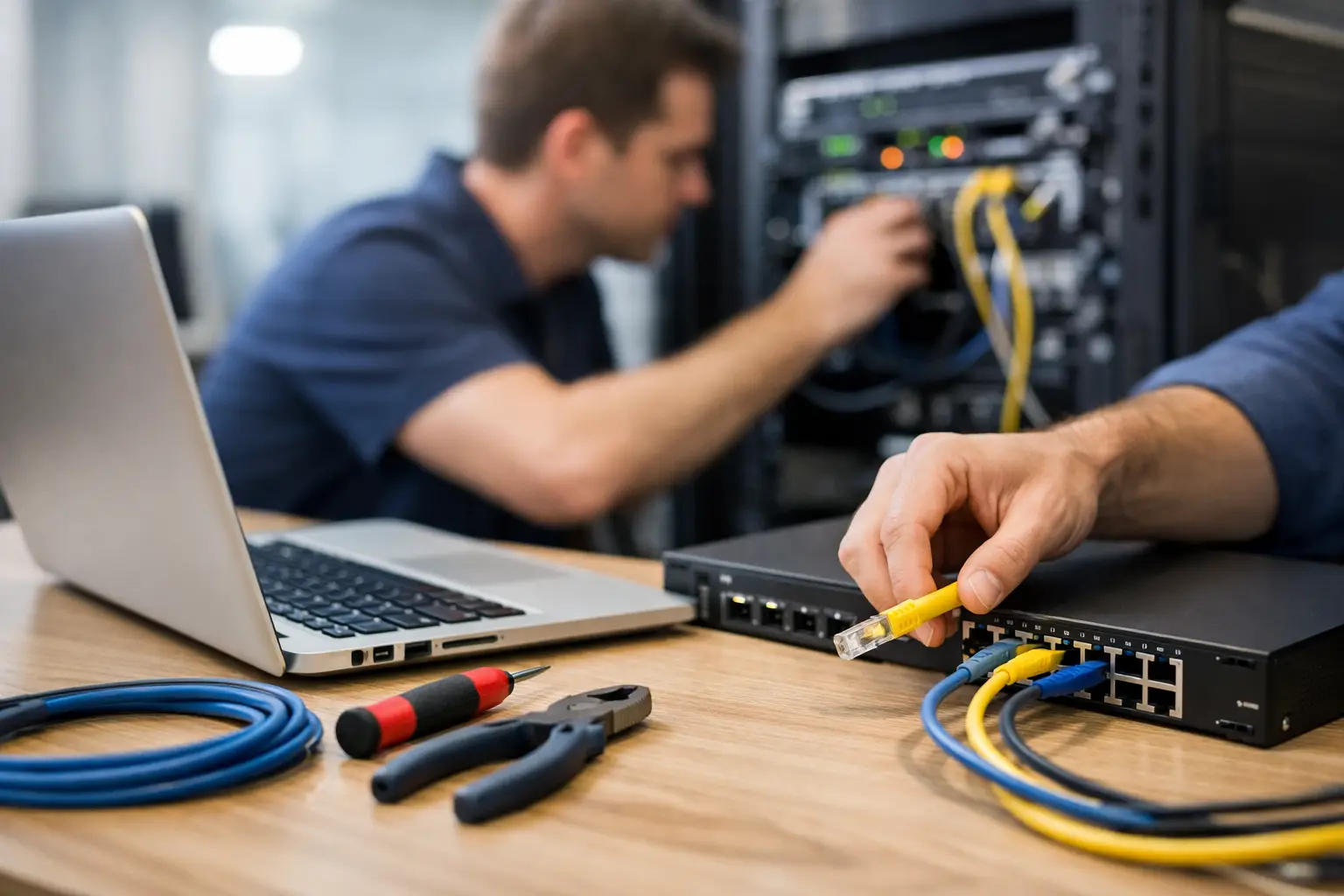
When the office network fails, the problem is rarely just “the internet.” It can mean a card terminal cannot process payments, shared files will not open, printers disappear, or staff lose access to cloud applications. A calm, methodical small office network troubleshooting guide helps you narrow down what failed before a minor interruption turns into a lost afternoon.

The goal is not to become an IT technician overnight. It is to identify the scope of the issue, rule out simple causes, protect your data, and know when professional help will save more time than continued trial and error.

Start With the Scope of the Problem

Before restarting equipment, ask who is affected and what they cannot do. One employee who cannot connect may have a computer, cable, Wi-Fi, or account issue. Every device losing internet access points more strongly to the router, modem, internet provider, power, or a network-wide setting.

Also separate internet access from local network access. A computer may still reach a shared printer or office file server even when websites will not load. On the other hand, employees may be able to browse the web but cannot access a shared folder, business application, or network printer. Those are different paths and usually require different fixes.

Write down the answers to a few basic questions: When did the problem start? Did it happen after a power outage, software update, new device installation, or office move? Is the issue affecting wired devices, Wi-Fi devices, or both? Error messages and timing often provide more useful clues than repeated reboots.

Check the Basics Before Changing Settings

A surprising number of network calls begin with a loose cable, an unplugged power strip, or equipment that was restarted in the wrong order. Check that the modem, router or firewall, network switch, and wireless access points have power. Look for warning lights, unusual blinking patterns, or a red or amber internet-status light.

For a wired computer, confirm that the Ethernet cable is firmly connected at both ends. If possible, test with a known working cable or move the computer to a port used by another working device. Cables can fail without visible damage, and a desk being moved can pull a connection just loose enough to cause intermittent trouble.

If the entire office is offline, restart equipment one piece at a time rather than unplugging everything at once. Turn off the modem, router, and switch. Turn the modem back on first and give it several minutes to fully reconnect. Then start the router or firewall, followed by the switch and wireless access points. This order allows each device to receive the connection it expects.

Avoid factory-resetting a router unless you have its internet settings, Wi-Fi configuration, and administrator credentials documented. A factory reset can erase the information needed to get the office back online.

Use One Working Device as Your Reference Point

A useful small office network troubleshooting guide starts by finding one device that works normally. Test a wired desktop, a laptop on Wi-Fi, and a mobile phone if available. Their results help isolate the fault.

If wired devices work but Wi-Fi devices do not, the internet connection may be fine while the wireless access point, Wi-Fi password, signal coverage, or wireless settings need attention. If Wi-Fi works but wired computers do not, look at the switch, Ethernet cabling, or a specific network port.

If only one computer is affected, restart that computer first. Confirm it is connected to the correct office Wi-Fi network, not a neighboring business or old guest network. On a wired connection, make sure the computer has not been switched to Wi-Fi and that airplane mode is off on laptops. Forgetting and reconnecting to the office Wi-Fi can help when a saved password or connection profile is corrupted, but be certain you have the current password before removing it.

Fix Slow Wi-Fi Without Guessing

Slow Wi-Fi is not always an internet provider problem. Distance, walls, metal shelving, microwaves, cordless devices, crowded wireless channels, and too many connected devices can all affect performance. A laptop that works well near the router but poorly in a back office is usually a coverage issue, not a broadband-speed issue.

Test the connection in two locations. If speed improves significantly near the wireless equipment, consider moving the access point to a more central, elevated location or adding properly placed access points. Do not rely on inexpensive range extenders as a universal fix. They can help in a small area, but they may cut available wireless capacity and create inconsistent connections if placed where the original signal is already weak.

Many offices use both 2.4 GHz and 5 GHz Wi-Fi bands. The 2.4 GHz band generally reaches farther but is often more crowded and slower. The 5 GHz band is usually faster at shorter distances. The best choice depends on the office layout, the age of the devices, and the applications employees use.

Guest Wi-Fi should be separate from the network used for business computers, printers, storage devices, and payment equipment. This improves security and prevents visitor devices from competing with work traffic.

When the Internet Is Down but the Network Is Still Up

If local devices can communicate but websites and cloud services cannot, check whether the outage affects more than one device. A phone using cellular data can help verify whether a website itself is unavailable, but do not use it as proof that the office internet connection is working.

Check the modem or router status display for an internet or WAN warning. If the modem shows no connection after a proper restart, contact the internet provider to confirm whether there is an area outage or an account-related issue. Keep the provider’s support number and account information somewhere accessible when the internet is down.

Sometimes websites fail because of a DNS issue. DNS is the service that translates a website name into the address a computer needs. If users can access one online service but not another, or receive “server not found” messages across several devices, the router’s DNS settings or the provider’s DNS service may be involved. This is a good point to document the symptoms and request technical support rather than changing unfamiliar router settings during a busy day.

Restore Printers, Shared Files, and Business Devices

A printer that says “offline” may be powered on but disconnected from the network. First verify that it has paper, no error message, and a working network cable or Wi-Fi connection. Then see whether other employees can print to it. If nobody can, the printer itself or its network connection is the likely issue. If only one person cannot print, the problem is more likely on that computer.

Shared folders and office applications can fail for reasons unrelated to the internet. Check whether the computer or server hosting the files is powered on and whether the affected employee can reach other shared resources. Do not casually change folder permissions in an attempt to restore access. Incorrect permissions can expose confidential business information or prevent others from working.

For payment terminals, cameras, phones, and other connected business equipment, avoid swapping network settings unless you know how the device is configured. Many depend on a reserved network address, a specific cable connection, or vendor-managed settings.

Look for Recent Changes and Security Warnings

Network problems often follow a change: a new router, internet-provider equipment replacement, a moved desk, a new employee device, an operating system update, or a power event. Make a short timeline of what changed and share it with the person troubleshooting. It can eliminate hours of unnecessary testing.

Be cautious if the issue includes unexpected password prompts, unknown devices on Wi-Fi, browser redirects, ransomware warnings, or security software being disabled. Disconnect an affected computer from the network if you suspect malware, but do not erase files or pay a ransom demand. Preserving the device and its error messages gives a technician a better chance of protecting data and identifying how far the issue spread.

Regular updates, unique router administrator passwords, secure Wi-Fi encryption, and tested backups reduce the damage from many network and computer problems. For a small office, the right setup is usually simple and well documented, not overloaded with enterprise features nobody can maintain.

Know When to Call for Help

Call for support when the entire office is offline, the problem returns after restarts, critical devices cannot connect, or you suspect malware, failed hardware, or unauthorized access. It also makes sense to get help when staff are losing billable hours trying to troubleshoot settings they do not normally manage.

A technician can test cabling, switches, wireless coverage, router logs, IP address conflicts, printer connections, and security settings without relying on guesswork. For local businesses, ICU Computer Services can provide practical on-site help for problems that need hands-on testing, while many software and configuration issues can be handled remotely.

Keep a simple record of your network equipment, Wi-Fi name, internet-provider details, printer addresses, and support contacts. The next time a connection drops, that small bit of preparation can turn a stressful outage into a manageable repair.

How to Remove Spyware Safely From Your Computer

How to Remove Spyware Safely From Your Computer

A computer that suddenly runs slowly, displays unfamiliar pop-ups, or redirects your browser may have more than a minor glitch. Spyware is designed to watch what you do, collect information, or open a path for other threats. Knowing how to remove spyware safely matters because rushing to delete the wrong files can damage Windows, erase needed evidence, or leave the infection behind.

The goal is not simply to make the warning messages disappear. It is to stop the spyware from communicating, remove it completely, protect your accounts, and make sure your computer is safe to use again.

Start by Limiting the Damage

If you suspect spyware, disconnect the affected computer from the internet. Turn off Wi-Fi or unplug the network cable. This can prevent the threat from sending data out, downloading more malicious files, or spreading across a shared home or office network.

Do not immediately reset the computer or start deleting random files. A factory reset may solve some infections, but it can also remove documents, photos, business files, saved settings, and information a technician may need to identify the problem. If the computer contains sensitive business data, customer information, banking records, or passwords, treat the situation with extra care.

For a small business, isolate the computer but leave other systems connected unless there are signs of a wider problem. If multiple devices are acting strangely, disconnect shared drives and contact your IT support provider before reconnecting anything. One infected workstation can become a larger network issue when people continue sharing files or signing in with the same credentials.

Recognize the Signs of Spyware

Spyware does not always announce itself. Some versions run quietly in the background, while others cause noticeable interruptions. Common warning signs include a browser homepage that changes without permission, search results that redirect to unfamiliar sites, new toolbars or extensions, frequent advertisements, and programs you do not remember installing.

You may also see unexplained slowdowns, unusually high network activity, security software that has been disabled, or alerts insisting that you must call a phone number or pay for a cleanup tool. Those urgent pop-ups are often scams themselves. Do not call the number, provide remote access, or enter a credit card number.

A slow computer alone does not prove spyware is present. An aging hard drive, too many startup programs, low storage space, or a failing hardware component can cause similar symptoms. A proper scan and diagnosis helps separate an infection from an ordinary computer repair issue.

How to Remove Spyware Safely Step by Step

Save essential files carefully

Before making major changes, back up important personal or business files if you can do so safely. Focus on documents, spreadsheets, photos, and project files. Avoid copying programs, installers, unknown downloads, browser extensions, or files with unusual names. Those can carry the infection to another device or back onto the cleaned computer.

Use an external drive that will be scanned before it is used elsewhere. If the computer is extremely unstable, encrypted by ransomware, or showing signs that files are being altered, stop and get professional help rather than continuing to work on it.

Run a full security scan

Reconnect only if your security tool needs an internet update, then disconnect again if possible. Update your trusted antivirus or anti-malware software and run a full scan, not just a quick scan. A full scan takes longer because it checks more locations, including startup items, temporary folders, downloads, and system areas where spyware may hide.

Follow the software’s instructions to quarantine or remove detected threats. Quarantine is often the safer first choice because it isolates suspicious files without immediately destroying them. Restart the computer when prompted, then run another full scan to verify that the threat is gone.

For stubborn infections, use your computer’s built-in offline scan option if available. This restarts the system and scans before most normal programs load, which can help catch malware that tries to protect itself while Windows is running.

Check apps, browsers, and startup items

After the scan, review recently installed applications and remove anything you do not recognize or no longer need. Be cautious with names that imitate legitimate software. If you are unsure whether an item is safe, do not guess. A quick online search may not be enough, since malicious programs often use believable names.

In every browser you use, remove unfamiliar extensions and review your homepage, search engine, and notification permissions. Spyware frequently enters through bundled browser add-ons or deceptive prompts that ask to “allow” notifications. Clear browser data if redirects or unwanted ads continue, but be aware that this may sign you out of websites and remove saved preferences.

Also review startup apps. Unnecessary programs launching at sign-in can slow the computer and may allow spyware to return. Disable only items you can identify confidently. Core Windows and hardware-related services should be left alone.

Update the computer before returning online

Install current operating system, browser, and security updates. Many infections take advantage of known weaknesses in outdated software. Update common targets as well, including PDF readers, office software, and remote access tools.

Once the computer is clean and updated, reconnect it to the internet and watch for the original symptoms. If redirects, pop-ups, unusual account activity, or security alerts return, the spyware may not have been fully removed. Continuing to use the system for banking, shopping, payroll, or client work is not worth the risk.

Change Passwords From a Clean Device

Spyware can capture passwords, browser cookies, or other account information. After cleanup, change passwords for your email account first. Email is the key to password resets for many other services. Then update passwords for banking, shopping, social media, cloud storage, work accounts, and any password manager.

Use a different, known-clean computer or phone for these changes when possible. If you change passwords from an infected machine, the new passwords may be captured too.

Choose long, unique passwords and turn on multi-factor authentication wherever it is offered. For financial accounts, review recent activity and contact the institution promptly if you see transactions or logins you do not recognize. Business owners should also review employee accounts, email forwarding rules, shared inboxes, and administrator access.

When Cleaning Is Not Enough

Some spyware is removed with a thorough scan. Other cases require more work. A professional cleanup or a full Windows reinstall may be the best option when the infection has disabled security tools, repeatedly returns after removal, creates unknown administrator accounts, or affects critical system files.

A reinstall takes more time because files must be backed up, the operating system must be installed again, updates applied, programs restored, and data checked before it is returned. The trade-off is confidence. For a deeply compromised computer, starting from a known-clean installation is often safer than trying to repair every changed setting.

Professional help is also a sensible choice if the computer holds irreplaceable photos, accounting records, client information, or a business application that cannot easily be reinstalled. ICU Computer Services can diagnose the issue, remove malware, protect recoverable data, and help determine whether cleaning or rebuilding the system makes the most sense.

Prevent the Next Infection

Most spyware infections begin with a convincing but unsafe click: an email attachment, a fake delivery notice, a software download from an unofficial site, or a pop-up claiming the computer is infected. A little caution goes a long way. Download software only from reputable sources, keep automatic updates enabled, and avoid installing more than one real-time antivirus program, since competing security tools can cause conflicts.

For families, use separate standard user accounts for daily use instead of giving everyone administrator access. For businesses, limit administrator privileges, keep backups separate from everyday computers, and make sure employees know how to report suspicious emails without embarrassment.

If something feels off, stop using the affected computer for sensitive tasks and get it checked early. Fast action protects more than the device – it protects the information, accounts, and work that depend on it.

Cloud Backup vs External Drive: Which Is Safer?

Cloud Backup vs External Drive: Which Is Safer?

A computer can seem perfectly fine right up until a hard drive fails, a ransomware message appears, or a laptop is dropped on the way to work. That is when the cloud backup vs external drive question becomes much more than a technical preference. The right answer depends on what you need to protect, how quickly you need it back, and what kind of loss you are preparing for.

For most homes and small businesses, the safest approach is not choosing one method over the other. It is using each one for the job it does best.

Cloud Backup vs External Drive: The Basic Difference

An external drive is a physical storage device connected by USB, or sometimes kept on a local network. You copy files, create a system image, or configure backup software to save information to that drive. The drive stays with you, which makes it fast and straightforward when you need to restore a large amount of data.

Cloud backup sends encrypted copies of selected files, folders, or entire systems through your internet connection to secure off-site data centers. Because the data is stored somewhere other than your home or office, it can still be available after a local disaster such as theft, fire, flood, or major hardware failure.

Both can protect valuable information. Neither is automatically a complete backup plan by itself.

When an External Drive Makes Sense

External drives are affordable, easy to obtain, and useful for fast local recovery. If a desktop computer stops starting but your backup drive is healthy, restoring files from a local device can be much quicker than downloading hundreds of gigabytes from the internet.

This is especially useful for large photo libraries, video projects, accounting records, design files, and full computer backups. A home user with years of family photos may appreciate being able to connect a drive and retrieve files without waiting for a long download. A small business may need a local backup to get a replacement workstation running quickly after a drive failure.

An external drive also gives you control over where the data is stored. There is no required monthly subscription for the storage itself, and once you purchase the drive, you can generally use it with backup software of your choice.

The drawback is that an external drive is still physical equipment. It can fail, be misplaced, be stolen, or be damaged along with the computer it was meant to protect. If it remains plugged in all the time, ransomware may be able to encrypt or delete the backup along with the original files.

For that reason, a drive that is used for backups should not be treated as permanent storage. Check it regularly, replace it when it begins showing signs of trouble, and keep a second copy elsewhere when the files truly matter.

Best practices for local drive backups

A local backup becomes more dependable when it is automated rather than dependent on memory. Set a schedule, confirm that backups are completing, and test restoring a few files occasionally. If the drive is only connected during the backup process, disconnect it afterward.

For especially important records, rotate two drives. Keep one at home or in the office for current backups and another in a secure off-site location. That requires more discipline, but it protects against a single event affecting both the computer and the backup.

Where Cloud Backup Has the Advantage

Cloud backup is strongest when the risk is bigger than one failed computer. It protects data from events that affect the whole location, including burglary, fire, water damage, power-related failures, and some types of ransomware.

It is also convenient for people who work from more than one place. A business owner may create invoices at the office, review documents from home, and occasionally work from a laptop while traveling. A properly configured cloud backup can protect those files without anyone remembering to carry a drive back and forth.

Most cloud backup services run automatically in the background once configured. That is a major benefit for busy households and small businesses. A backup that happens every day is more valuable than a perfect plan that never gets started.

Cloud services can also preserve earlier versions of files. If someone accidentally overwrites a spreadsheet or deletes an important folder, version history may allow recovery of an older copy. This feature can be very helpful after accidental changes or a malware incident, although retention periods vary by service and plan.

Cloud backup is not the same thing as cloud file syncing. Services that synchronize files across devices can be useful, but a deletion or corrupted file may sync across all connected devices. True backup services are designed to retain recoverable copies and versions. Before relying on any service, verify how long deleted files and previous versions are kept.

The limits of cloud backup

The main limitation is recovery speed. Backing up and restoring large amounts of data depends on your internet upload and download speeds. A few documents may return quickly, but restoring a multi-terabyte office server or a large media library can take a long time.

Cloud backup also has an ongoing cost. Monthly or annual fees are often reasonable, but businesses should account for the number of computers, the amount of data, and any added fees for extended version retention or faster recovery options.

There is also a setup issue. Backup software must be configured to include the right locations. Important data may be stored in Desktop, Documents, accounting software folders, email archives, shared network folders, or application-specific locations. If those folders are missed, the service can report successful backups while leaving out the files you need most.

What Can Go Wrong With Either Option

The biggest backup failure is assuming a copy exists without checking it. A drive may be full, disconnected, or failing. A cloud account may have stopped backing up after a password change, billing problem, software update, or error message that nobody noticed.

Another common problem is backing up the wrong data. Many people protect documents but forget browser bookmarks, local email files, photos saved outside standard folders, software license keys, or business databases. Small businesses should also consider whether their point-of-sale system, customer records, QuickBooks files, shared folders, and employee documents are included.

Ransomware changes the conversation as well. If malware encrypts files and the backup is connected or immediately synchronized without version protection, the backup may be affected. This is why multiple backup copies and version history matter.

A useful standard is the 3-2-1 approach: keep at least three copies of important data, on two different types of storage, with one copy stored off-site. For many people, that means the original files on the computer, a backup on an external drive, and another backup in the cloud.

Choosing the Right Setup for Your Situation

For a home computer with family photos, tax records, and personal documents, an external drive plus cloud backup offers excellent protection without unnecessary complexity. Use the external drive for a local copy that can be restored quickly, and let cloud backup protect against loss of the home or the device.

For an independent professional, cloud backup is often essential because business records may be needed from several locations. Add an external drive if you work with large files or cannot afford to wait through a lengthy online restore.

For a small business, think beyond individual computers. Identify where business-critical data lives, who is responsible for checking backups, and how long the business could operate without those files. A backup plan should include restoration priorities. Payroll data, customer records, accounting files, email, and shared documents may not all need to be restored in the same order.

It also helps to decide whether you need file-level backup, a full system image, or both. File backup protects documents and data. A system image can restore the operating system, installed programs, settings, and files to replacement hardware more quickly. The right mix depends on how much downtime you can tolerate.

Do Not Wait for a Data Loss to Test Recovery

A backup is only useful if you can restore from it. Once your system is in place, test it. Restore a document from the cloud. Retrieve a folder from the external drive. Make sure the restored files open correctly and are not missing important information.

If the options feel confusing, that is normal. Backup planning involves more than buying a drive or signing up for storage. It means identifying the files that matter, protecting them in more than one place, and making sure recovery will work when you need it. A trusted local technology partner such as ICU Computer Services can help set up and verify a plan that fits your computer, internet connection, and budget before a simple computer problem turns into permanent data loss.

Best Small Business Backup Solutions That Work

Best Small Business Backup Solutions That Work

A failed hard drive rarely waits for a quiet afternoon. It can happen while invoices are due, appointments are being scheduled, or a team member is trying to open the only copy of an important customer file. The best small business backup solutions are not simply places to store extra files. They are recovery plans that let your business keep working after hardware failure, accidental deletion, ransomware, theft, or a major internet outage.

For many small businesses, backup is easy to postpone because everything appears to be working. That is exactly when a practical backup plan should be put in place. The goal is not to buy the most complicated system. It is to protect the information your business relies on and make sure someone can restore it when needed.

What a Small Business Backup Must Protect

Before comparing backup options, identify what would cause real disruption if it disappeared. Most businesses need more than copies of documents saved on office computers. Customer records, accounting data, estimates, photos, scanned paperwork, shared folders, email, and line-of-business software may all need protection.

A common mistake is assuming that cloud-based programs automatically cover everything. Microsoft 365, Google Workspace, QuickBooks Online, and other hosted services have their own safeguards, but those safeguards are not always the same as a complete, long-term backup under your control. Deleted files, overwritten records, account compromise, and retention limits can still create problems.

Also consider the computer itself. If a workstation fails, restoring individual documents is helpful, but restoring the full system can save far more time. A full-image backup can bring back the operating system, installed software, settings, and files without requiring a technician or employee to rebuild the machine from scratch.

The Best Small Business Backup Solutions Use More Than One Copy

The most dependable approach is often called the 3-2-1 rule. Keep three copies of important data, stored on two different types of media, with one copy kept off-site. It is simple advice, but it addresses the failures that hurt small businesses most.

For example, a business might keep working files on its computers or server, create a local backup to a network storage device, and send an encrypted backup to a secure cloud service. If a staff member deletes a file, the local copy may restore it quickly. If the office has a fire, flood, burglary, or ransomware incident, the off-site copy gives the business another path to recovery.

A single external drive is better than nothing, but it is not a complete strategy. It can fail, be stolen, or be connected during a ransomware attack. Likewise, putting every file in one cloud folder may be convenient, but it may not protect full computers, software configurations, or files that are accidentally synchronized as deleted.

Local backup for fast recovery

Local backup usually means saving data to a dedicated external drive, network-attached storage device, or backup appliance located at the office. Its biggest advantage is speed. Large files and complete system images can usually be restored much faster over a local network than downloaded from the internet.

This option works well for businesses with large design files, photo libraries, video, databases, or several workstations. The trade-off is that local equipment needs attention. It should be monitored, protected from power problems, and replaced before aging drives become unreliable. It also cannot be the only backup because it remains in the same building as the computers it protects.

Cloud backup for off-site protection

Cloud backup sends encrypted copies of selected files, systems, or servers to a remote data center. It is especially useful when a local disaster affects the entire office or when employees work from different locations. Most cloud backup services can run automatically in the background, which reduces the risk of someone forgetting to plug in a drive or start a backup job.

The main trade-off is recovery time. A few documents can come back quickly, but restoring hundreds of gigabytes or several full computers may depend on your internet connection. Ask how long a full restoration is likely to take, whether there are retrieval charges, and how long older versions of files are retained.

Hybrid backup for businesses that cannot wait

For many small businesses, a hybrid setup is the strongest practical choice. It combines a local backup for quick recovery with a cloud copy for protection away from the office. This setup costs more than using one external drive, but it limits the number of situations that can stop your business cold.

A hybrid plan is particularly worthwhile for offices that depend on one server, use specialized software, or cannot reasonably wait days to retrieve large amounts of data. It also gives business owners clearer choices during an emergency: restore a single file locally, recover a workstation image, or use the cloud copy after a site-wide loss.

Features That Matter More Than Storage Size

Backup services often advertise large storage limits, but capacity is only one part of the decision. A low-cost plan that is difficult to restore is not a bargain during an emergency. Focus on how the service protects and retrieves your information.

Look for version history, which keeps earlier copies of files. This matters when a spreadsheet is overwritten, a folder is deleted, or ransomware encrypts files before the problem is noticed. Without enough version history, a backup may contain only the damaged version.

Encryption is also essential. Data should be encrypted while moving to the backup service and while stored there. Your business should understand who controls the encryption key and how access is protected. Strong passwords and multi-factor authentication should be used for every backup administration account.

Ransomware protection deserves special attention. Some backup systems offer immutable copies, meaning backup data cannot be changed or deleted for a defined period. That can be valuable because ransomware attackers often target backups after gaining access to a network. Immutability is not a substitute for security updates and antivirus protection, but it adds an important layer of defense.

Finally, choose a solution with clear alerts and reporting. A backup that silently failed three months ago is not a backup plan. Someone should receive notice when a device has not backed up, storage is running low, or a scheduled job fails.

Match the Backup Plan to How Your Business Works

There is no single package that fits every business. A self-employed professional with one laptop may need encrypted cloud backup, an external drive for occasional full images, and protection for email and financial records. A small office with multiple computers may need centralized backup, shared-folder protection, and a documented process for restoring a failed workstation.

Businesses running an on-site server have additional needs. Server backups should include applications, databases, user permissions, and system configuration, not just a copy of visible files. Database-driven software may require application-aware backups so records are captured consistently rather than copied while they are in use.

Remote and hybrid teams should also review where files actually live. Data scattered across personal laptops, cloud folders, USB drives, and email attachments is harder to protect. Setting clear rules for where business files are stored can be just as valuable as selecting a backup product.

Test Recovery Before You Need It

The most overlooked part of backup is restoration testing. A backup report may say “successful,” yet the restored file may be incomplete, the password may be unavailable, or the recovery process may take longer than expected. Testing finds those issues while there is still time to fix them.

At least a few times each year, restore a sample folder, an important document, and a full workstation image if your plan includes one. Confirm that the files open correctly and that the person responsible for recovery knows the steps. For critical systems, document who has access, where credentials are stored securely, and which applications must be restored first.

It also helps to decide how much data your business can afford to lose and how long it can afford to be offline. If daily backups run overnight, you could lose a day of work after a failure. If that is unacceptable, more frequent backup intervals may be necessary. The right schedule depends on the value and pace of your data.

Avoid These Common Backup Gaps

Small businesses often discover backup gaps only after something goes wrong. Watch for these four problems:

  • Important files are stored only on one employee’s computer or in a personal cloud account.
  • Backup drives stay connected all the time and can be encrypted by ransomware along with the main computer.
  • Email, cloud storage, and specialized software are assumed to be protected without confirming retention and recovery options.
  • No one has tested a restore or knows the login details for the backup account.

These issues are usually fixable without replacing every piece of technology. A short review of where data lives, what gets backed up, and how recovery works can reveal the highest-priority improvements.

Get Help Building a Plan You Can Restore

Backup should make a business owner feel prepared, not buried in technical choices. Start with the data that would be hardest to replace, then choose local, cloud, or hybrid protection based on how quickly you need to recover and what a day of downtime would cost.

A trusted IT partner can help identify overlooked data, configure automated backups, secure access, and test recovery before a real emergency. ICU Computer Services helps small businesses take a practical approach: protect what matters, verify that it can be restored, and keep the plan simple enough to maintain. The best backup is the one that is running, monitored, and ready when an ordinary workday suddenly is not.

Why Is My Computer Freezing? Common Fixes

Why Is My Computer Freezing? Common Fixes

A computer freeze has a way of arriving at the worst possible moment: during payroll, in the middle of a school assignment, or just before you save an important file. If you are asking, “why is my computer freezing,” the answer is usually not random. Freezing is a symptom that points to a software conflict, limited system resources, overheating, failing hardware, or sometimes a malware infection.

The good news is that the pattern of the freeze often provides useful clues. A computer that locks up only when opening one program needs a different fix than a computer that freezes before Windows fully starts. Paying attention to when it happens can save time and help protect your files.

Why Is My Computer Freezing? Start With the Pattern

First, separate a true freeze from a slow computer. A slow computer may take a long time to open programs but still responds to clicks and keystrokes. A frozen computer stops responding completely, the mouse may not move, the screen may remain stuck on one image, or an application may show “Not Responding.”

If only one application is frozen, press Ctrl + Shift + Esc to open Task Manager. Find the program under Processes, select it, and choose End task. You may lose unsaved work in that program, but it can prevent the entire computer from needing a restart.

If nothing responds, hold the power button down until the computer turns off. This should be a last resort because a forced shutdown can damage an open file or interrupt an update. After restarting, give the computer a few minutes before reopening every program you had running. Repeating the same workload immediately can make it harder to tell what caused the problem.

Too Many Programs Can Use Up Available Resources

One of the most common causes of freezing is a computer that has run out of working memory or is being pushed too hard by background activity. Web browsers are frequent culprits, especially when they have many tabs, video streams, extensions, and web-based business tools open at once.

Task Manager can show which programs are using high amounts of CPU, Memory, Disk, or Network resources. A single application using a large share of the processor is not always a problem. Video editing, large spreadsheets, and antivirus scans can legitimately use significant resources. The concern is an application that stays unusually high while the computer becomes unusable.

Close applications you no longer need, then restart the computer. A restart clears temporary processes and memory that can build up over days or weeks of leaving a system on. For an older computer with limited RAM, upgrading memory or replacing an aging hard drive with a solid-state drive can make a meaningful difference. The right upgrade depends on the computer’s age, condition, and how you use it.

Software Conflicts, Updates, and Drivers

Freezing that starts after installing a new program, browser extension, printer, or update often points to a software conflict. A program may be incompatible with your version of Windows, or it may conflict with security software or another utility running in the background.

Start by thinking about what changed shortly before the issue began. If a new application was installed, remove it and see whether the freezes stop. If the problem occurs only in a browser, disable extensions one at a time. Toolbars, coupon finders, download helpers, and unfamiliar extensions can affect performance and may create security concerns.

Drivers are another common source of lockups. A driver allows Windows to communicate with hardware such as your video card, printer, Wi-Fi adapter, and storage device. An outdated, damaged, or incorrect driver can cause freezing, blue-screen errors, display glitches, or devices that disconnect unexpectedly.

Windows Update should be allowed to complete, but do not assume every driver update is automatically the best fix. For some devices, especially graphics cards and specialized business hardware, the manufacturer’s supported driver may be more appropriate. If freezes began immediately after an update, a technician may need to roll back the driver or investigate whether the update exposed an underlying hardware problem.

Heat Can Make a Computer Freeze or Shut Down

Computers create heat whenever they work. Dust buildup, blocked air vents, failed cooling fans, and dried thermal compound can prevent that heat from escaping. When internal temperatures rise too high, the computer may slow down, freeze, restart, or shut off to protect itself.

A laptop that freezes after being used on a blanket, couch, or soft surface may simply be unable to vent heat properly. Move it to a hard, flat surface and check that its vents are clear. Desktop computers also need room for airflow, particularly if they are stored in enclosed cabinets or near heat sources.

Listen for warning signs. Loud fans that run constantly, a laptop that becomes unusually hot underneath, or a desktop that suddenly powers off during games or demanding work may indicate a cooling issue. Cleaning a computer safely can help, but opening a system without the right tools or experience can damage small components. This is often a sensible repair to have handled professionally.

Failing Hardware Is More Serious Than a Temporary Freeze

A failing hard drive or solid-state drive can cause repeated freezing, long startup times, files that refuse to open, error messages, and strange clicking sounds from traditional hard drives. If your computer freezes while accessing files, installing updates, or booting into Windows, storage health should be checked promptly.

Memory problems can produce similar symptoms. Bad or poorly seated RAM may cause random freezing, application crashes, or blue-screen errors that appear to have no consistent pattern. Power supply issues, failing batteries, motherboard faults, and overheating graphics cards can also create intermittent freezes.

The priority in these cases is your data. If the computer still starts, back up important documents, photos, financial files, and business records as soon as possible. Do not keep restarting a computer that makes repeated clicking noises, reports drive errors, or cannot find its operating system. Continued use can make data recovery more difficult and more expensive.

Malware and Unwanted Software Can Lock Up a System

Malware is not always obvious. Some infections display pop-ups or demand payment, while others quietly use processing power, change browser settings, capture information, or install unwanted programs. A computer that suddenly freezes, runs hot while idle, opens unfamiliar windows, or redirects web searches should be checked for malware.

Run a reputable security scan and remove any threats it identifies. Also review recently installed programs and browser extensions. Be cautious with free cleanup tools that claim to find hundreds of problems, then demand payment before they will fix anything. Some are more interested in selling a subscription than resolving the underlying issue.

For a small business, one infected computer can affect shared files, email accounts, customer information, and network devices. Disconnecting a suspected infected computer from the network can limit further exposure while the issue is assessed.

A Practical Troubleshooting Order

When a computer freezes repeatedly, avoid changing ten things at once. Work through the basics in a controlled order so you can identify what helped.

  1. Restart the computer and note exactly when the freeze occurs.
  2. Save or back up important files before further troubleshooting.
  3. Check Task Manager for unusually heavy CPU, memory, or disk usage.
  4. Remove recently installed software, suspicious browser extensions, or unnecessary startup programs.
  5. Install pending Windows updates and verify that security software is current.
  6. Run a malware scan and check for warning signs of storage or overheating problems.
  7. Seek help if freezes continue, especially if you see blue-screen errors, drive warnings, unexpected shutdowns, or missing files.

Safe Mode can also be useful when Windows freezes soon after startup. This mode starts Windows with a limited set of drivers and services. If the computer runs normally in Safe Mode, the cause is more likely related to startup software, a driver, or another nonessential service. If it still freezes in Safe Mode, hardware becomes more likely.

When It Is Time for Computer Repair Help

Occasional freezing after opening too many programs may be manageable at home. Repeated freezing is different, particularly when it interrupts work, threatens important data, or affects more than one device. A professional diagnosis can test hardware, review system errors, check for malware, and determine whether repair, replacement, or an upgrade makes the most financial sense.

ICU Computer Services helps home users and small businesses sort out these issues without burying them in technical language. Whether the problem calls for remote troubleshooting, hardware repair, virus removal, or data recovery support, the goal is to identify the cause before a minor interruption becomes lost work or lost files.

A freeze is your computer’s way of telling you something needs attention. Treat recurring lockups as an early warning, keep current backups of the files that matter, and get the system checked before the next restart is the one it does not recover from.

Virus Removal: What to Do When Your PC Is Infected

Virus Removal: What to Do When Your PC Is Infected

A computer infection rarely announces itself politely. It may start with a browser that keeps redirecting, a flood of pop-ups, unfamiliar programs, or a system that suddenly takes ten minutes to open email. Effective virus removal means more than deleting one suspicious file. The goal is to stop the infection, protect accounts and data, remove the cause, and make sure the problem does not return.

For a home computer, that can mean saving family photos and financial information. For a small business, it can mean protecting customer data, invoices, email access, and a workday that cannot afford to stop. A calm, methodical response is usually far more useful than clicking every warning that appears on screen.

Signs You May Need Virus Removal

Some infections are obvious. A fake security alert may demand payment, your wallpaper may change, or files may become inaccessible. Other threats are quieter. Adware can slow browsing and track activity. A password-stealing program may run in the background without changing anything you can see.

Watch for a computer that becomes unusually slow, restarts without warning, opens programs on its own, displays repeated advertisements, or sends emails and social messages you did not write. New browser toolbars, a changed home page, unknown extensions, and search results that lead to strange websites can also point to a problem.

Not every slow computer has a virus. Aging hardware, a nearly full drive, failing storage, too many startup programs, or an incomplete software update can cause similar symptoms. That is why a proper diagnosis matters. Removing the wrong program can create more trouble, while missing the real cause leaves the system exposed.

What to Do First When You Suspect an Infection

If you think a computer is infected, disconnect it from the internet when practical. Turn off Wi-Fi or unplug the network cable. This can help prevent a threat from communicating with outside systems, spreading through a shared network, or uploading more information.

Do not enter passwords, banking details, or credit card information on the affected computer until it has been checked. If you recently used sensitive accounts, change those passwords from a different, trusted device. Start with your email account, since email password resets often provide access to many other services. Use unique passwords and turn on multi-factor authentication where available.

Avoid calling the phone number in a pop-up or granting remote access to someone who contacted you unexpectedly. Legitimate security companies do not normally lock your screen and demand that you call immediately. These messages are designed to create urgency, not to solve your problem.

If the computer still works, make a note of what you see: error wording, unfamiliar program names, the time the issue began, and any files that suddenly changed. That information can help identify whether the issue is adware, a browser hijacker, ransomware, or a system problem that only looks like malware.

Why Virus Removal Is Not Just Running a Scan

Security software is a useful first line of defense, but a scan result is not always the end of the job. Some threats install multiple components, create scheduled tasks, change browser settings, alter startup items, or leave behind unwanted software that causes the same symptoms later.

A thorough virus removal process usually includes checking active processes, installed programs, browser extensions, startup settings, and security logs. It also involves verifying that operating system and browser updates are current. When an infection has had time to run, technicians may need to remove damaged files, repair system settings, or restore data from a clean backup.

Ransomware requires special caution. If files have been encrypted, repeatedly restarting the computer or experimenting with random tools can make recovery harder. Disconnect the device, preserve any ransom note or file extension information, and get professional guidance before taking further action. Whether data can be recovered depends on the ransomware type, available backups, and how quickly the infection was contained.

For small businesses, the scope may be larger than one computer. A single compromised workstation can expose shared folders, cloud accounts, network equipment, and email contacts. The right response may include checking other connected devices, resetting credentials, reviewing account activity, and confirming backups are intact.

When You Can Handle It Yourself

A basic cleanup can be reasonable when the symptoms are limited and you are comfortable working through software settings. For example, if a browser extension appeared after installing a free program, removing the extension, uninstalling the unwanted application, updating the browser, and running a reputable security scan may resolve the issue.

Be cautious with free cleanup utilities and online instructions. Some tools marketed as virus cleaners are themselves unwanted software. Downloading several unknown programs in an attempt to fix one infection can turn a manageable issue into a larger repair.

You should also avoid deleting files simply because their names look unfamiliar. Windows and many applications use technical file names that are easy to mistake for malware. If you are not sure what a file does, a diagnosis is safer than guesswork.

When Professional Virus Removal Makes Sense

Professional help is a better choice when the computer will not start normally, security software will not run, files are missing or encrypted, pop-ups return after cleanup, or online accounts may have been compromised. It also makes sense when the device contains business records, tax documents, client information, or photos that have not been backed up.

The value is not only in removing malware. A technician can identify related issues such as a failing hard drive, outdated security software, a vulnerable router setting, or a backup that has not been running. Those details affect whether your computer stays reliable after the immediate problem is gone.

ICU Computer Services can provide practical virus and malware cleanup for local customers who prefer in-office or on-site help, as well as remote support when the computer can safely connect to the internet. For customers who just want the problem handled, clear communication matters: what was found, what was removed, whether data was affected, and what steps will reduce the chance of a repeat infection.

Protecting Your Computer After Virus Removal

Once the system is clean, take a few straightforward steps to reduce future risk. Keep Windows, browsers, and commonly used programs updated. Updates often fix security weaknesses that attackers already know how to exploit.

Use trusted security software and make sure its protection features are actually enabled. Keep regular backups of files that matter, ideally with one copy stored separately from the computer. A backup connected all the time can be affected by some ransomware, so a cloud backup with version history or a disconnected external backup offers additional protection.

Be selective about attachments, downloads, and login requests. A message can look like it came from a delivery company, a bank, a coworker, or a family member. Before opening an attachment or signing in through a link, pause and verify the sender another way. That brief check can prevent hours of repair work.

For a business, separate user accounts, limited access to shared data, secure Wi-Fi, and regular backup checks can make a major difference. These are not complicated enterprise-only measures. They are sensible safeguards that help contain damage if one device is ever compromised.

A computer that has been cleaned should feel normal again: browsers open where they should, programs respond, and you can use the device without wondering what is running in the background. If something still feels off, trust that instinct. Early attention is usually the simplest, least expensive way to keep a small problem from becoming a lost-data or lost-workday problem.

8 Best Tools for Malware Removal

8 Best Tools for Malware Removal

A computer that suddenly runs hot, throws pop-ups, or takes forever to open basic programs usually is not just “getting old.” In many cases, malware is the real problem. If you are comparing the best tools for malware removal, the right choice depends on what kind of infection you are dealing with, how badly the system is affected, and whether this is a one-time cleanup or part of ongoing protection.

For home users, the goal is usually simple: get the computer usable again without losing files. For small businesses, there is a second concern – making sure one infected machine does not turn into a network-wide problem. That is why malware removal is not really about finding one magic app. It is about using the right tool for the job, in the right order.

What makes a malware removal tool worth using?

A good malware removal tool should do more than run a quick scan and give you a green checkmark. It needs to identify current threats, remove them cleanly, and avoid breaking normal system functions in the process. Some tools are better at catching adware and browser hijackers. Others are stronger against trojans, rootkits, ransomware-related files, or persistent startup infections.

Speed matters, but accuracy matters more. A fast scan is convenient, but not if it misses the process that keeps reinstalling the infection every time the computer reboots. Ease of use also matters, especially for home users who do not want to sort through technical logs just to know whether the system is safe.

Best tools for malware removal and what each does well

Malwarebytes

Malwarebytes is one of the most widely used cleanup tools for a reason. It is especially strong at finding adware, potentially unwanted programs, fake antivirus software, browser-based junk, and many common malware infections that traditional antivirus programs sometimes miss.

For many infected home computers, this is the first tool worth running after disconnecting from unnecessary network access. Its interface is straightforward, the scan results are easy to understand, and it is often effective on machines that feel slow, unstable, or cluttered with suspicious pop-ups. The trade-off is that no single scanner catches everything, so it works best as part of a layered approach rather than the only line of defense.

Microsoft Defender

Microsoft Defender has improved a lot over the years. On modern Windows systems, it provides solid built-in protection without requiring another paid product right away. For many users, especially those with safe browsing habits and current updates, it offers a good baseline level of security.

Its biggest advantage is convenience. It is already integrated into Windows, updates automatically, and does a decent job with real-time monitoring. The limitation is that on heavily infected systems, built-in protection can be disabled, bypassed, or simply outperformed by dedicated cleanup tools designed for active malware removal.

ESET Online Scanner

ESET Online Scanner is useful when you want a second opinion from a trusted security engine without fully changing your antivirus setup. It can catch threats that another installed product missed and is often a smart next step when a machine still acts infected after an initial cleanup.

This tool is especially helpful for users who want a reputable scan without committing to a full software switch. Because it is more of an on-demand scanner than an all-in-one repair platform, it may not be enough by itself for deeper system repair, but it is strong as a verification step.

HitmanPro

HitmanPro is known for fast, effective second-opinion scanning. It is often used when a computer shows clear signs of infection but the primary antivirus keeps reporting that everything is fine. It can be very effective at identifying hidden threats, suspicious behaviors, and leftovers from infections that were only partially removed.

One reason technicians like tools like this is speed. When you need another layer of confirmation without spending hours on a full suite install, it can save time. Still, fast tools are not always the final answer on deeply compromised machines, especially if Windows system files or startup settings have already been altered.

AdwCleaner

AdwCleaner is a focused tool, and that is exactly why it earns a place on this list. It is particularly useful for removing adware, unwanted browser extensions, homepage hijackers, toolbars, and junk applications that slow down computers and clutter browsers.

If the problem started after downloading a “free” PDF converter, game mod, coupon helper, or bundled installer, AdwCleaner is often worth trying early. It is not designed to replace a full malware scanner, but it is very effective for the kind of unwanted software that makes a computer feel infected even when the issue is technically categorized as adware or a potentially unwanted program.

Norton Power Eraser

Norton Power Eraser is more aggressive than many standard cleanup tools. That can be helpful when stubborn threats refuse to go away, but it also means users should be careful and review detections before removing everything automatically.

Its strength is going after difficult infections and suspicious software behaviors. Its downside is the same thing that makes it powerful – aggressive detection can sometimes flag legitimate programs. On a business computer with specialized software, that matters. This is a tool best used with a little caution rather than as a first click for every issue.

Kaspersky Virus Removal Tool

Kaspersky Virus Removal Tool is another strong on-demand cleaner for active infections. It is often used when a machine needs a deeper manual cleanup than a lightweight scanner provides. It can be effective against a broad range of malware, including more entrenched threats.

The main thing to understand is that deeper scans usually take longer. That is not a flaw. It is often the price of better visibility into what is running, what is hidden, and what needs to be quarantined or removed.

Windows Safety Scanner

Windows Safety Scanner is a useful option for users who want a Microsoft-provided standalone scan beyond normal Defender activity. It can help identify and remove certain threats on demand, particularly when you want to check a system without changing your primary setup.

It is best viewed as one more troubleshooting option, not a cure-all. On a mildly suspicious system, it can be enough. On a badly infected machine, it is usually one step in a broader repair process.

How to choose the right malware removal tool

The best choice depends on symptoms. If browser redirects, pop-ups, and unwanted extensions are the main issue, a focused cleanup tool such as AdwCleaner or Malwarebytes often makes sense. If the machine appears deeply compromised, with disabled security tools, startup errors, or suspicious background activity, a stronger second-opinion scanner or offline cleanup method may be needed.

For small business systems, there is another factor: risk to shared files, email, credentials, and other devices. In that case, choosing a tool is only part of the job. You may also need password resets, patching, software updates, and network review after the infection is removed. Cleaning the malware but ignoring the doorway it used is how repeat infections happen.

When software is not enough

Some infections are not just annoying. They can damage Windows files, corrupt user profiles, interfere with backups, or leave behind system instability even after the malware itself is gone. That is when the real question changes from “Which scanner should I run?” to “Is this machine fully trustworthy again?”

If the computer still crashes, will not update, cannot access security settings, or behaves strangely after multiple scans, a manual repair may be the safer path. In some cases, backing up data and reinstalling Windows is faster and more reliable than chasing every leftover change. For business users, that decision often comes down to downtime and confidence. A clean rebuild can be the most practical fix when trust in the system is gone.

Good cleanup habits after malware removal

Removing malware is only half the job. Once the system is clean, update Windows, browsers, and major applications right away. Change passwords for email, banking, and business accounts if there is any chance credentials were exposed.

It also helps to review what allowed the infection in. Old software, weak passwords, risky downloads, fake browser notifications, and missing updates are common causes. A lot of repeat service calls come from the same root issue, not from unusually advanced malware.

For families and small businesses, consistent maintenance makes a real difference. Keep security tools current, avoid running multiple antivirus products at the same time, and make sure backups are working before there is a problem. If you need help deciding whether a computer is truly clean or just temporarily quieter, getting a second set of experienced eyes can save time, data, and frustration.

The best malware removal tool is the one that matches the infection you actually have, not the one with the loudest marketing. Start with a reputable option, pay attention to what the computer is telling you, and if the problem looks deeper than a normal cleanup, do not wait too long to get it properly repaired.

Email Migration for Small Business Done Right

Email Migration for Small Business Done Right

Monday morning is a bad time to find out half your staff cannot log in to email. For many owners, that is what makes email migration for small business feel risky. Email touches everything – customer communication, invoices, calendars, password resets, mobile phones, and day-to-day operations. When it goes well, nobody thinks much about it. When it goes badly, the whole business feels it.

The good news is that most email migrations are manageable with the right planning. The trick is not treating the move like a simple account switch. You are moving years of communication, user habits, mobile device settings, shared calendars, contact lists, and often your domain records too. Small businesses usually do not have the luxury of a full IT department standing by, so the process has to be practical, organized, and realistic.

Why email migration for small business gets complicated

At first glance, moving email can sound simple. Export the old data, set up the new accounts, and point the domain to the new service. In real life, there are a few moving parts that create trouble.

One issue is that businesses rarely use email in a clean, standardized way. One employee keeps everything in local folders on a desktop. Another uses only a phone. Someone else shares a login with a former employee even though they should not. There may be old aliases nobody documented, forwarding rules that were set up years ago, or POP accounts that downloaded mail to one machine and left no server copy behind.

Another challenge is timing. Email systems rely on DNS records, and those changes can take time to update across the internet. That means you can have a period where some messages land in the old system while others start arriving in the new one. If you do not plan for that overlap, messages can appear to go missing when they are really split across platforms.

Then there is the human side. Even if the technical cutover is correct, users still need passwords updated, phones reconnected, desktop apps reconfigured, and a basic explanation of what changed. For a small business, that support step matters just as much as the back-end work.

What should be decided before the move

A successful migration starts with a few decisions made early. The first is what you are actually moving. Some companies need every mailbox, every folder, and every calendar item transferred. Others only need active user mailboxes and recent history. If a business has very old accounts, former employee mailboxes, or oversized archives, moving everything may not be worth the cost or time.

The second decision is where the new email will live. Some businesses are moving from a basic hosting provider to Microsoft 365 or Google Workspace. Others are leaving an outdated in-house server. The right destination depends on how the company works. If your team relies heavily on Outlook, shared calendars, desktop apps, and Microsoft tools, one path may make more sense. If the business prefers browser-based work and simpler administration, another option may fit better. There is no universal best choice, only the better fit for your staff and workflow.

The third decision is how much disruption is acceptable. A small office might handle an evening or weekend cutover with a little cleanup the next morning. A business that receives orders by email all day may need a more controlled migration with testing, staged account setup, and close monitoring during the transition.

The data people forget about

When owners think about email, they usually think about inbox messages. That is only part of the job. Contacts, calendars, shared mailboxes, aliases, distribution lists, signatures, mobile sync, and archived folders all need attention.

Public-facing addresses also deserve a careful review. Sales, support, billing, and info addresses are often tied to forwarding rules or shared access. If those are rebuilt incorrectly, the business can miss leads or service requests without realizing it right away.

There is also the question of local data. Some users keep important mail in Outlook data files stored only on their computer. Others have desktop contact lists or calendar items that never properly synced to the old server. Those items will not magically appear in the new platform unless someone checks for them.

A practical migration process

Most small businesses do best with a phased approach. Start by auditing what exists now. That includes current mailboxes, aliases, groups, devices, local archives, domain DNS records, storage sizes, and who needs access to what. This is also the time to identify bad habits that should not be carried into the new setup, like shared passwords or old accounts that should have been shut down years ago.

Next comes preparation. New accounts are created, licenses assigned, security settings configured, and the destination environment tested. If multi-factor authentication will be required, that should be planned before cutover day, not introduced in the middle of user confusion. Domain settings should be reviewed carefully so mail flow, autodiscover, spam protection, and verification records are all ready.

After that, mailbox data is migrated. Depending on the source and destination, this can be done through built-in tools, third-party migration utilities, or manual export and import. The best method depends on the systems involved, mailbox sizes, and how much downtime the business can tolerate. Faster is not always better if it increases the chance of missing folders or corrupting data.

Then comes the cutover itself. DNS changes are made so new mail begins routing to the new service. During this period, testing matters. Send and receive tests should be done inside the company and with outside addresses. Shared mailboxes, aliases, calendar sharing, mobile access, and desktop apps should all be checked. If something is broken, it is far easier to fix it during a controlled rollout than after a full workday of confusion.

The last step is post-migration support. This is where many projects fall short. Even when the back-end migration is technically successful, users still need help reconnecting phones, updating saved passwords, adjusting Outlook profiles, or understanding small differences in the new system. Good support during the first few days prevents a lot of frustration.

Common mistakes that cause downtime

One of the biggest mistakes is skipping the pre-migration audit. If nobody documents aliases, forwarding rules, shared folders, and local archives, important pieces get left behind. Another common problem is changing DNS records without understanding the full email setup. MX records are only part of the picture. SPF, DKIM, and other related settings affect deliverability and security too.

Small businesses also get into trouble when they underestimate user support. If ten employees all arrive Monday morning and need help reconnecting their phones, even a well-planned migration can feel like a mess. Staggered scheduling, clear instructions, and available support make a real difference.

There is also a temptation to use the migration as a cleanup project and a platform change and a security overhaul all at once. Sometimes that works. Sometimes it creates too many moving parts. It depends on the business. If the current environment is already unstable, it may be smarter to complete the move first and handle broader improvements right after.

Should you do it yourself or get help?

That depends on the size of the business, how complex the current setup is, and how costly downtime would be. A very small office with a few straightforward accounts may be able to handle a migration in-house if someone is comfortable with DNS, mailbox exports, and client reconfiguration. Even then, it helps to have a checklist and a rollback plan.

If the business has years of data, shared mailboxes, mobile users, archived PST files, custom domain email, or employees who need hands-on setup, support is usually worth it. This is especially true if email is tied closely to customer service, sales, scheduling, or billing. A family-owned IT company like ICU Computer Services often sees the same pattern: the technical move is only half the project, and the real value comes from reducing business interruption while making sure people can get back to work quickly.

What a good result looks like

A good migration does not mean zero questions and zero hiccups. That is not realistic. A good result means your mail is flowing properly, older messages are where they should be, users know how to sign in, mobile devices reconnect without drama, and customers never notice a problem.

It also means the business ends up in a better place than where it started. That might be more reliable mail delivery, stronger spam protection, easier account management, or less dependence on one old computer in the office. The best migrations are not just about moving data. They reduce future headaches.

If you are planning a move, give the process the same attention you would give your accounting system or customer records. Email may feel routine, but for most small businesses it is one of the systems nobody can afford to get wrong. A little planning up front is often what keeps a stressful switch from turning into a lost week.

Top Signs Hard Drive Failure Is Starting

Top Signs Hard Drive Failure Is Starting

Your computer usually gives you a little warning before a hard drive quits completely. The problem is that those warnings are easy to dismiss at first. A slow startup feels annoying but manageable. A missing file seems random. A clicking sound might get blamed on something else. When you know the top signs hard drive failure is starting, you have a better chance of protecting your files before the drive stops working at all.

For home users, that can mean saving family photos, tax documents, and schoolwork. For small businesses, it can mean avoiding downtime, lost records, and a much more expensive recovery situation. Hard drives do not always fail all at once, but they rarely get better on their own.

Top signs hard drive failure is getting worse

Some symptoms are obvious, and some are subtle. What matters most is the pattern. If your computer has been acting strangely in more than one way, the storage drive should be high on the suspect list.

Strange clicking, grinding, or buzzing sounds

One of the clearest warning signs with a traditional hard disk drive is unusual noise. If you hear clicking, grinding, beeping, or repeated spin-up sounds coming from the computer, that can point to mechanical trouble inside the drive.

This does not apply the same way to solid-state drives, since SSDs have no moving parts. But if you are using an older desktop or laptop with a spinning hard drive, odd sounds should never be ignored. A healthy hard drive may make some normal operating noise, but sharp clicking or repeated mechanical sounds are different. That is often the moment to stop using the system for anything nonessential.

Files disappear, become corrupted, or will not open

When documents suddenly go missing, photos will not load, or files open with errors, people often assume the software is at fault. Sometimes it is. But repeated file corruption can also mean the hard drive is having trouble reading and writing data correctly.

If this starts happening across different folders or different programs, pay attention. One damaged file can be a fluke. A growing number of unreadable files is a different story.

The computer freezes during basic tasks

A system that locks up while opening folders, saving files, or launching ordinary programs may be struggling with drive access. This is especially true when the freezing seems tied to file activity rather than internet use or one specific app.

You may notice the computer stalls for long periods, then suddenly catches up. You may also see the spinning wait cursor more often than usual. If basic tasks feel like they are taking far too long, a failing drive is one possible cause.

Very slow startup and shutdown times

Computers do get slower with age, but there is a difference between general slowness and a storage device that is starting to fail. If boot times have changed dramatically, or the system hangs for a long time during shutdown, the drive may be having trouble completing read and write operations.

This can also happen with software issues, malware, or low available storage, so it is not a perfect one-symptom diagnosis. Still, when slow startup is combined with freezing, strange noises, or file errors, the picture becomes much clearer.

Blue screens, error messages, and disk warnings

If you are seeing repeated system crashes, disk read errors, SMART warnings, or messages that Windows needs to scan and repair the drive, take them seriously. Those alerts are not always a sign of permanent failure, but they are often a sign that something is wrong.

Some people click past these messages and keep working because the computer still turns on. That can buy a little time, or it can make the situation worse if the drive is actively deteriorating. A warning today can become a drive that is no longer detected tomorrow.

What these symptoms look like in real life

Hard drive problems do not always announce themselves in a dramatic way. Often, the signs show up as everyday frustrations that slowly become more frequent.

A home computer might start taking ten minutes to load the desktop. A business laptop might freeze whenever someone opens QuickBooks or saves a PDF. An external backup drive may disconnect randomly or refuse to copy large folders. A student may find that a paper saved last night will not open in the morning. These are the kinds of details that matter.

People sometimes wait because the machine still works part of the time. That is understandable. But intermittent drive problems are often the stage when data still has the best chance of being copied safely.

The top signs hard drive failure is near complete failure

As the drive gets worse, symptoms usually become harder to ignore. The computer may stop recognizing the drive at startup. The operating system may fail to load. Files may vanish from entire folders. In some cases, the system powers on but goes straight to a black screen, repair loop, or boot error.

At that point, continuing to restart the machine over and over can be risky. The same goes for running repeated scans, installing software, or copying large amounts of data without a plan. If the drive is physically failing, extra stress can reduce the chance of successful recovery.

Hard drive or something else?

Not every slow or unstable computer has a bad hard drive. Malware, failing memory, overheating, Windows corruption, and even a bad update can create similar symptoms. SSD issues can also look different from old-school mechanical drive failure. An SSD usually does not click or grind, but it can still become unreadable, vanish from the system, or start throwing errors.

That is why proper diagnostics matter. Guessing can waste time and sometimes make the problem worse. The goal is not just to identify the failed part. It is to protect the data while there is still a good chance to do so.

What to do if you notice these warning signs

First, back up anything important immediately if the drive is still accessible. Focus on documents, photos, business files, email archives, and anything else that would be difficult or impossible to replace. Use an external drive or another safe destination, but avoid unnecessary copying if the drive is making loud mechanical noises or dropping in and out.

Second, stop using the computer for routine work if the symptoms are severe. Every additional startup, download, or file transfer may add stress to a failing device. That does not mean you need to panic, but it does mean this is not the time to keep putting it off.

Third, get the machine tested. A proper diagnostic can help determine whether the issue is the hard drive, the operating system, another hardware component, or a combination of problems. For many customers, the real value is knowing whether they should prioritize backup, replacement, recovery, or all three.

Why waiting can get expensive

There is a big difference between replacing a drive before total failure and trying to recover data after the drive becomes unreadable. If the warning signs are caught early, the fix may be relatively straightforward. If the drive fails completely, the cost and complexity often go up.

That matters for families and small businesses alike. Lost accounting files, customer records, years of photos, or school documents can create stress that far outweighs the price of a timely repair. In many cases, the best money-saving move is acting sooner, not later.

A practical way to think about drive health

Hard drives are wear items. Some last many years. Some fail early. Heat, age, physical bumps, power issues, and plain bad luck all play a role. That is why regular backups matter even if your current computer seems fine.

If your system is showing one mild symptom, monitor it closely. If it is showing several of the top signs hard drive failure is underway, assume the risk is real until proven otherwise. That mindset helps you make better decisions while the drive is still giving you a chance.

At ICU Computer Services, we have seen plenty of cases where a customer waited just a little too long because the computer was still sort of working. If your machine is making odd noises, freezing during simple tasks, or showing file and disk errors, treat that as your window to act. The best time to protect your data is before the drive decides it is done for good.